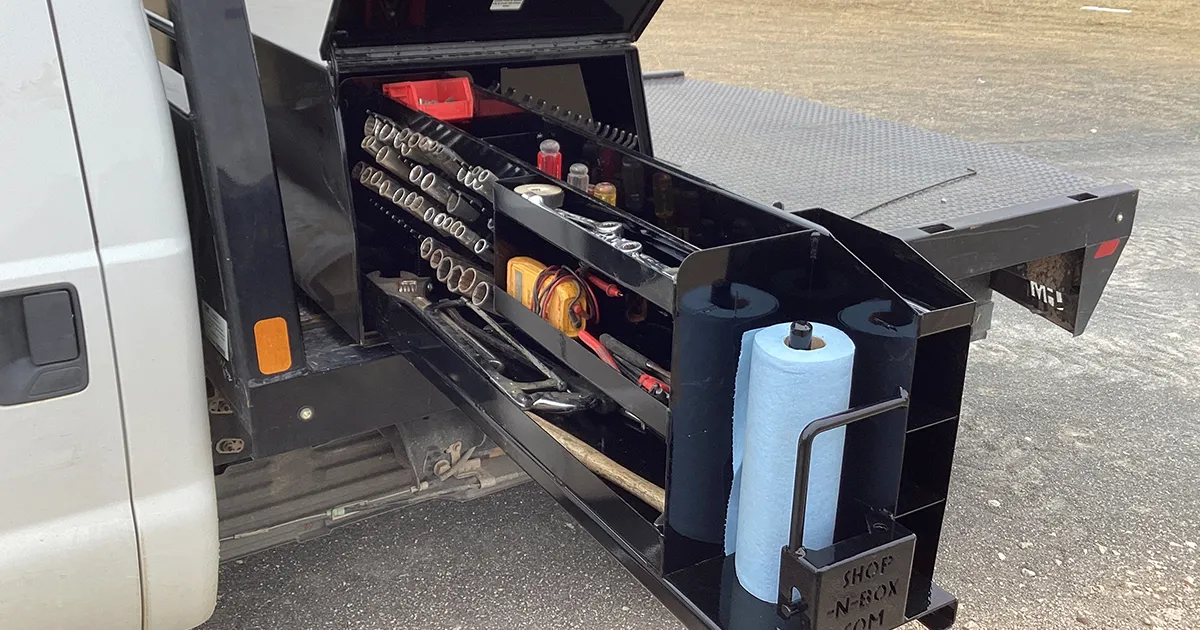
Tool organization is not just a preference - it is a performance system. This post is for anyone who is tired of digging through a truck, buying duplicates, and losing time on simple jobs. You will learn why organization matters, what "repeatable layout" actually changes on a crew, and how a roll-out truck toolbox setup makes the difference.
- Who this helps: service trucks, trades, utilities, ag/ranch, fleet buyers
- What you will know after reading: the real cost of chaos and the fix
- What to do next: request a quote for a layout built around your tools
Why does tool organization matter in the real world?
Because small delays stack up all day and turn into lost uptime, missed deadlines, and wasted labor.
Most people underestimate how often a tech touches the truck in a day. Every extra minute spent searching, climbing in, or unloading tools to reach tools is time you never get back. Over a week, that adds up to real labor cost and real frustration.
A toolbox should support your workflow - not slow it down. That is why a roll-out truck toolbox organization system focuses on access, repeatability, and keeping the same tools in the same place every time.
What is the hidden cost of disorganization on a service truck?
Disorganization drives tool loss, duplicate purchases, longer training, and more downtime than most teams realize.
The cost is not only the time spent searching. It is also:
- Buying duplicates because you cannot find what you already have
- Losing accountability because tools do not have a home
- Slower training because every truck is "different"
- More mistakes because the setup changes day to day
If you manage multiple trucks, this becomes a fleet problem fast. Start with a repeatable layout plan on the fleet page.
How does a repeatable tool layout improve speed and accountability?
A repeatable layout makes the truck predictable - which speeds up work and makes missing tools obvious.
Repeatable layout means your core tools live in the same place, in the same order, on every truck. That changes everything:
- New hires learn faster because the system is consistent
- Techs stop wasting steps and stop "rebuilding the truck" daily
- Inventory stays cleaner because missing tools stand out
Shop-N-Box setups are designed around that repeatability using modular inserts and vertical drawer organization, so the layout is not random - it is intentional.
To see how the system is built for daily use, review how the patented roller system works.
Why do roll-out systems beat digging through a truck bed?
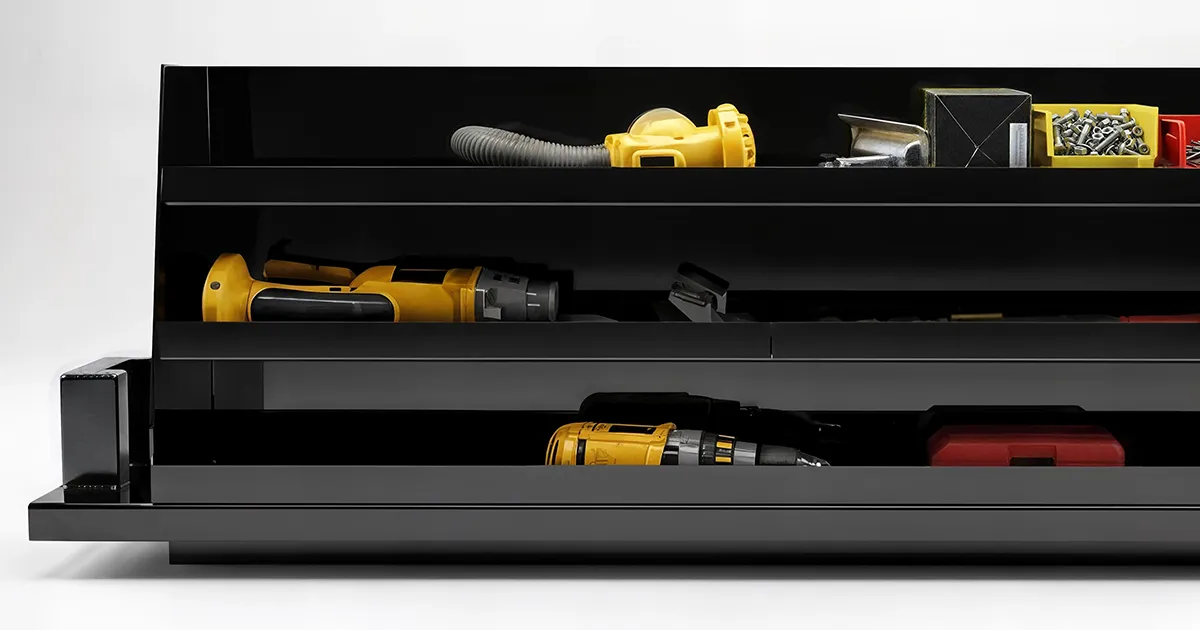
Full roll-out access brings tools to you, so you stop climbing in, reaching deep, and unloading to get what you need.
The common failure mode on job sites is simple - you cannot reach what you need quickly, so you improvise. That leads to piles, mixed bins, and tools migrating around the truck.
A roll-out approach solves the access problem:
- Tools come to you with full roll-out access
- Inserts keep categories separated (sockets, wrenches, parts, specialty tools)
- Organization stays consistent instead of collapsing into a heap
If you are comparing options, start with intent pages like the 2-80 toolbox or the 1-80 series toolbox, then request a quote for a configuration that matches your daily carry.
What does a "good" organized toolbox setup include?
A good setup prioritizes your core tools, uses inserts that match your work, and keeps the same layout every day.
There is no universal best layout, but there is a universal rule - build the system around what gets used most.
A simple structure that works across industries:
- Top priority access for daily tools (the 20 percent used constantly)
- Tool organizer inserts for sockets, wrenches, and drivers
- Storage inserts for bulk tools, parts, and consumables
- Blank inserts where you need custom space
Capacity varies by model and insert configuration, but the goal stays the same - a layout you can repeat without thinking.
What is the fastest way to upgrade your organization without overthinking it?
Start with your daily tool list, then request a quote so your roll-out system is built around how you actually work.
If you want a clean path forward, do this:
- List the tools you grab daily and weekly
- Note what keeps getting buried, lost, or duplicated
- Decide what matters most - speed, visibility, or storage
- Request a quote and include your truck details and tool priorities
If you want help choosing direction, the Shop-N-Box team can guide you toward the right class of toolbox, including JP Elite Super 40 if visibility and workstation-style access matter.
For broader guidance on workplace organization and efficiency, these resources are useful:
- NIOSH workplace safety resources can support organized, consistent work practices in the field. (https://www.cdc.gov/niosh/)
- OSHA safety topics include general guidance that reinforces disciplined, repeatable work habits. (https://www.osha.gov/topics)
Related resources
On Shop-N-Box
- Request a quote for a roll-out truck toolbox system
- How the patented roller system works
- Fleet tool storage systems and standardized layouts
- 2-80 toolbox for roll-out organization
- 1-80 series toolbox for repeatable layouts
- JP Elite Super 40 toolbox for added capacity
External