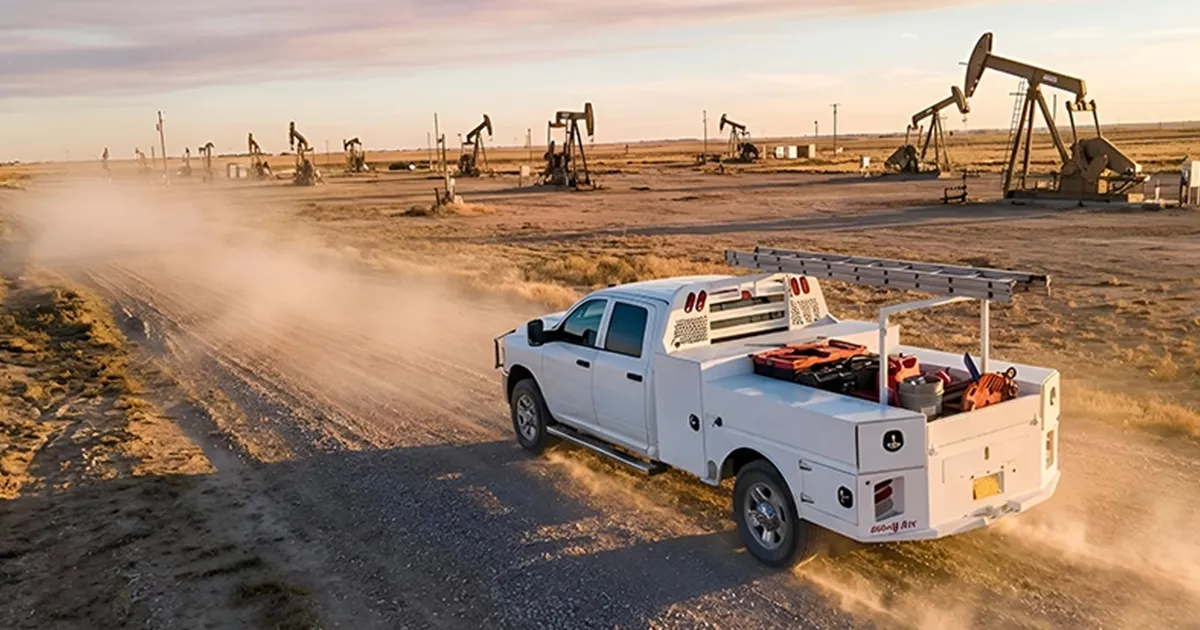
Oilfield work is brutal on equipment. Rough roads, daily vibration, mud, and constant stop-and-go access will expose weak tool storage fast. This checklist is for buyers who want an oilfield-ready toolbox that protects uptime, keeps tools accountable, and makes access faster on the job. We will cover what matters most in an oilfield toolbox and how to avoid the common failures that waste time.
- Who this helps: oilfield service crews, foremen, owner-operators, fleet managers
- What you will know: the checklist to compare boxes and avoid rough-road failures
- What to do next: request a quote for a toolbox configuration built around your tools
What makes a toolbox "oilfield-ready"?
An oilfield-ready toolbox is built for rough roads, repeated daily use, and fast access without climbing in or digging.
Oilfield conditions punish weak hardware and messy layouts. If a toolbox is hard to access, crews will bypass it, pile tools, and lose the benefits. If the access mechanism cannot handle vibration and weight day after day, it turns into downtime.
A better system is built around rough-road performance, full access, and a repeatable layout that keeps the same tools in the same place.
What should you check first when comparing oilfield toolboxes?
Start with access and durability, because speed and uptime disappear when the box is hard to reach or fails under vibration.
Use this quick first-pass filter before you get distracted by extra features:
- Can you access core tools fast - without unloading other tools first?
- Does the design support repeated daily cycles in rough terrain?
- Can the layout stay consistent, or will it collapse into a pile?
If you want a baseline for what "full access" looks like, review how the patented roller system works.
Why does full roll-out access matter in the oilfield?
Full roll-out access brings tools to you, which cuts wasted motion and keeps crews working instead of digging through a bed.
Oilfield work is not gentle or slow. When a tech has to climb into a truck bed, reach deep, or unload gear to get to one item, you lose minutes at a time. Those minutes stack into labor cost and frustration across the week.
A roll-out approach helps because:
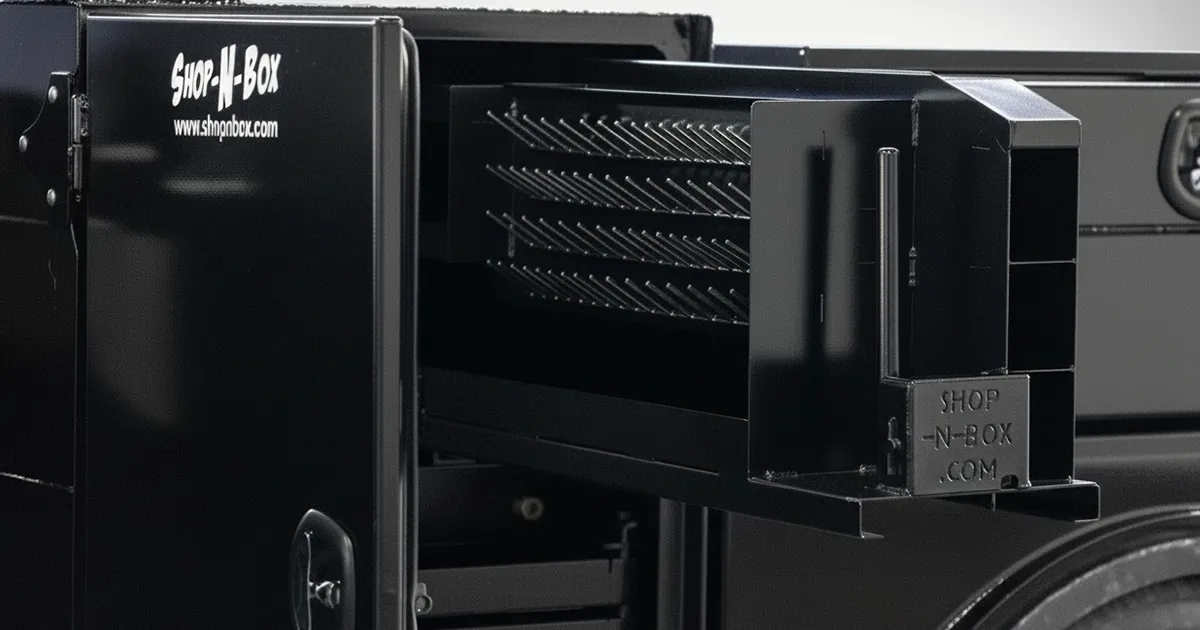
- Tools come to you with full roll-out access
- Inserts keep categories separated instead of mixed bins
- You can standardize where things live, which makes missing tools obvious
Shop-N-Box systems use a patented roller system designed for daily use on rough roads - not cabinet slide hardware.
What insert and layout features matter most in oilfield work?
Modular inserts and vertical organization matter because they protect repeatability, speed training, and improve accountability across crews.
The oilfield checklist is not "how much can you cram in." It is "can you find the right tool fast, every time." That is where modular organization pays off.
Look for:
- Tool organizer inserts for sockets, wrenches, and drivers
- Storage inserts for bulk tools, consumables, and parts
- Blank inserts where you need custom space
- A layout you can replicate across trucks for faster training
If you manage multiple units, the biggest win is standardization - start with the fleet standardization approach.
How do you avoid tool loss and duplicate purchases on oilfield trucks?
Give every core tool a home, keep the layout consistent, and make missing tools obvious at a glance.
When tools float around the truck, the same problems repeat:
- Crews buy duplicates because they cannot find what they already own
- Tools get "borrowed" and never return
- Restocking becomes guesswork
- New hires take longer because every truck is different
A repeatable layout fixes that. The goal is not perfection - it is predictability. If you want a toolbox configuration that supports accountability, start with an intent page like the 2-80 toolbox or the 1-80 series toolbox, then request a quote.
What safety and transport checks should be part of your toolbox decision?
A real oilfield checklist includes safe loading, secure transport, and a layout that reduces risky climbing and reaching.
Storage is part of safety. When tools are scattered, crews climb, reach, and move heavy items in awkward ways. A setup with better access reduces those risky habits.
For general safety guidance that affects tool storage and handling:
- OSHA has standards and guidance related to hand and power tools and workplace practices. (https://www.osha.gov/hand-and-power-tools)
- NIOSH provides workplace safety resources that support safer, more consistent field work. (https://www.cdc.gov/niosh/)
- FMCSA cargo securement rules are relevant any time equipment is transported on commercial vehicles. (https://www.fmcsa.dot.gov/regulations/cargo-securement)
What is the simplest oilfield toolbox checklist you can use today?
Choose a toolbox that supports full access, rough-road durability, modular inserts, and a repeatable layout - then standardize it if you run multiple trucks.
Here is the checklist you can use on any quote call or product comparison:
- Access: full reach to daily tools without unloading
- Durability: built for rough roads and repeated daily cycles
- Organization: modular inserts that keep categories separated
- Repeatability: the same layout every day, and across trucks if needed
- Accountability: tools have a home and missing tools stand out
- Ordering: a quote process that builds around your workflow
If you want the fastest path to the right setup, go straight to industries - oilfield and then request a quote with your truck details and core tool list.
Related resources
On Shop-N-Box
- Request a quote for an oilfield roll-out toolbox setup
- Oilfield tool storage built for rough roads
- How the patented roller system works
- Fleet tool storage systems and standardized layouts
- 2-80 toolbox for full roll-out access
- 1-80 series toolbox for repeatable organization
External